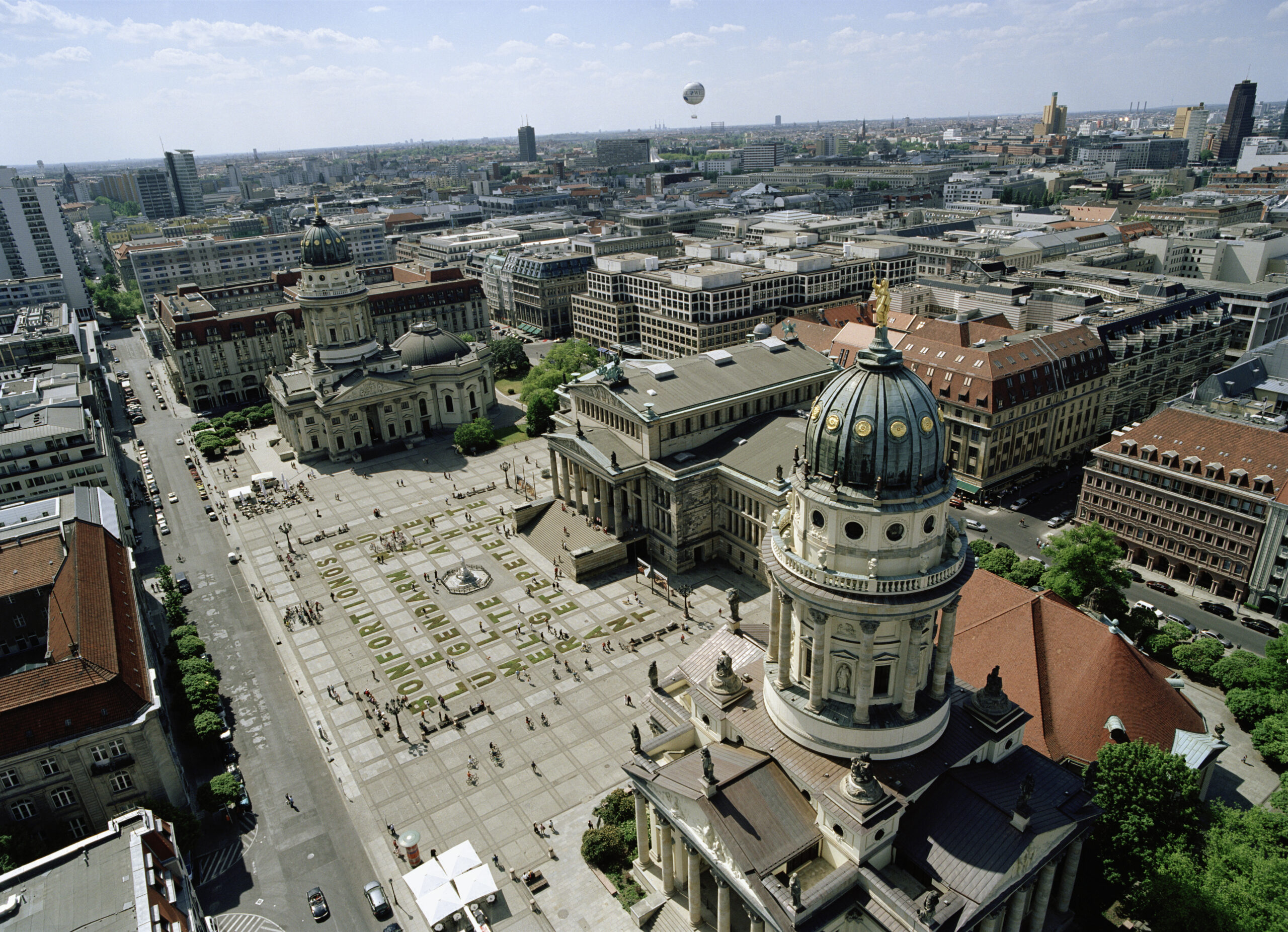
The history of the language of the urban populace is also part of the history of the city… Huguenots, French émigrés fleeing the Revolution, on numerous occasions occupying forces. They all left traces that linger, which, sometimes well-concealed, surface again in common turns of speech and in typical snappy Berlin sayings and are also always time capsules recording echoes of their era.
Ewald Harndt, Französisch im Berliner Jargon
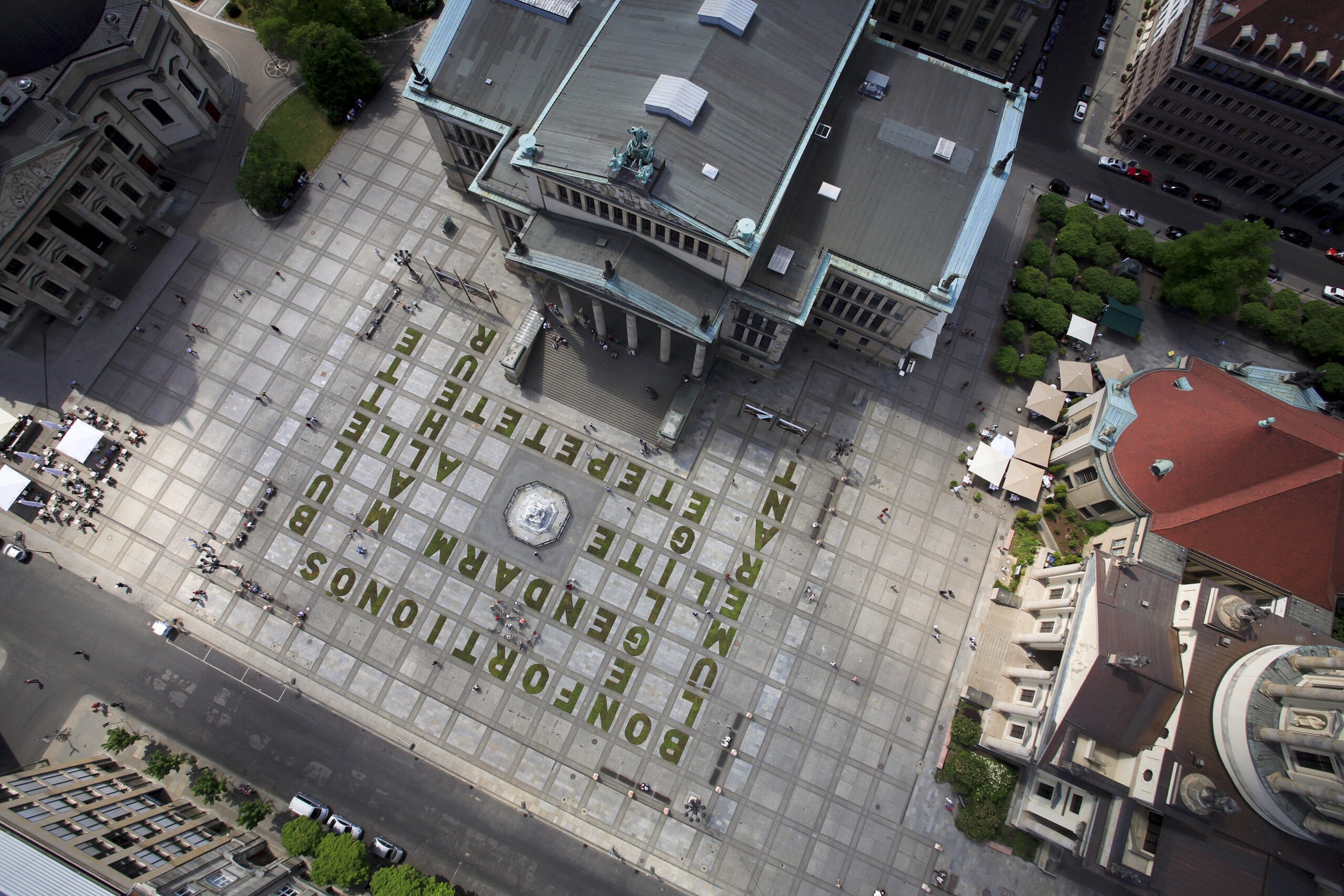
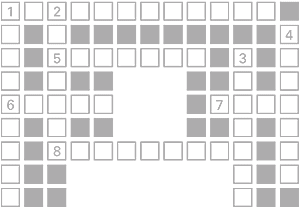
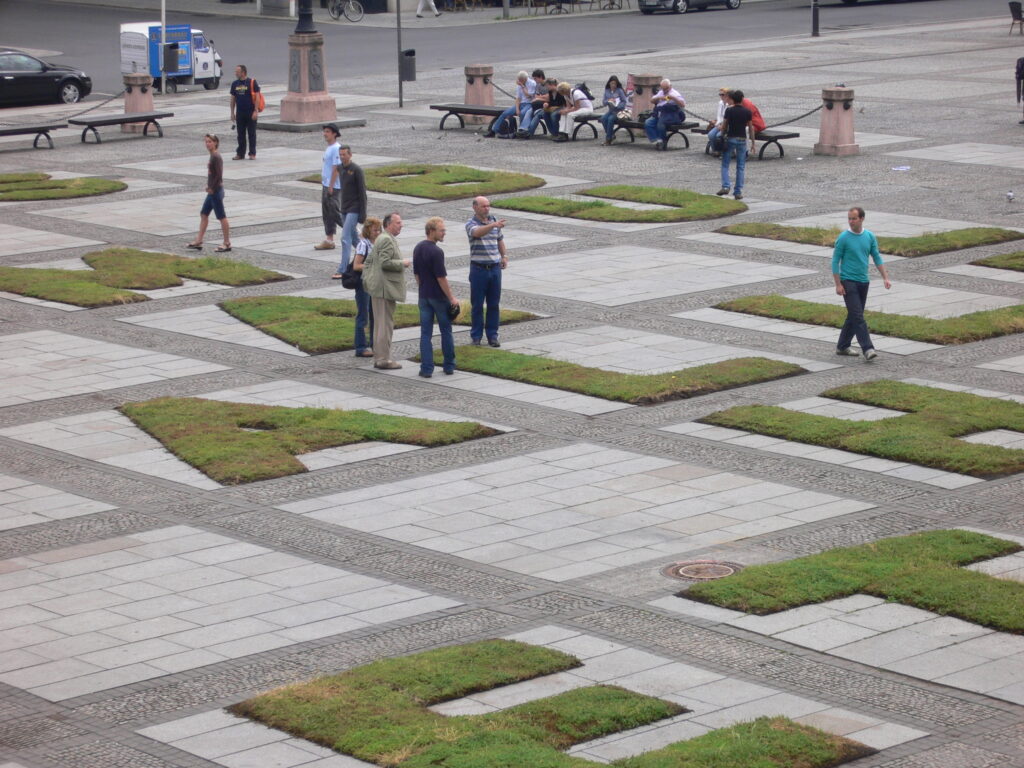
Down 1 in the sense of “I feel queasy, dizzy, off colour”, for in German if you’re a bit off-colour you might say you feel “faint-blue”; derived from bleumourant. Bleu-mourant is a fading, pale blue, a particular ornamentation with which Frederick II. adorned his porcelain tableware, a delicate pastel colour, which the Berliners referred to as »forget-me-not boiled in milk«, in the 18th century bleu-mourant is said to have been a fashionable colour in Parisian haute couture. 2 naturalised colloquial term for dressing gown or peignoir, literally sloppy clothing 3 misfortune, mishap 4 meatballs, the hallmark of Berlin’s cuisine
Across 1 wonderful, magnificent; derived from bonne fortune (good luck) 5 policeman, “armed men”, one of many naturalised colloquial terms from the days when Frederick II. surrounded himself with so many French people in Sanssouci that his guest Voltaire once remarked maliciously: “Your Majesty is the only foreigner in our midst.” 6 selection of the best 7 in the sense of “used up, worn out”; an anecdote tells of two Huguenot sisters who used to offer their handmade embroidery work and bobbin lace at the entrance to the Jungfernbrücke and would reply “c’est allé” (it’s run out, is used up) if someone asked for a particular pattern that was sold out 8 affected, excessively refined, fastidious, from être peut-être (to be in doubt)